4 November 2026
How to Bargain Online in the UK?
How to Bargain Online in the UK?
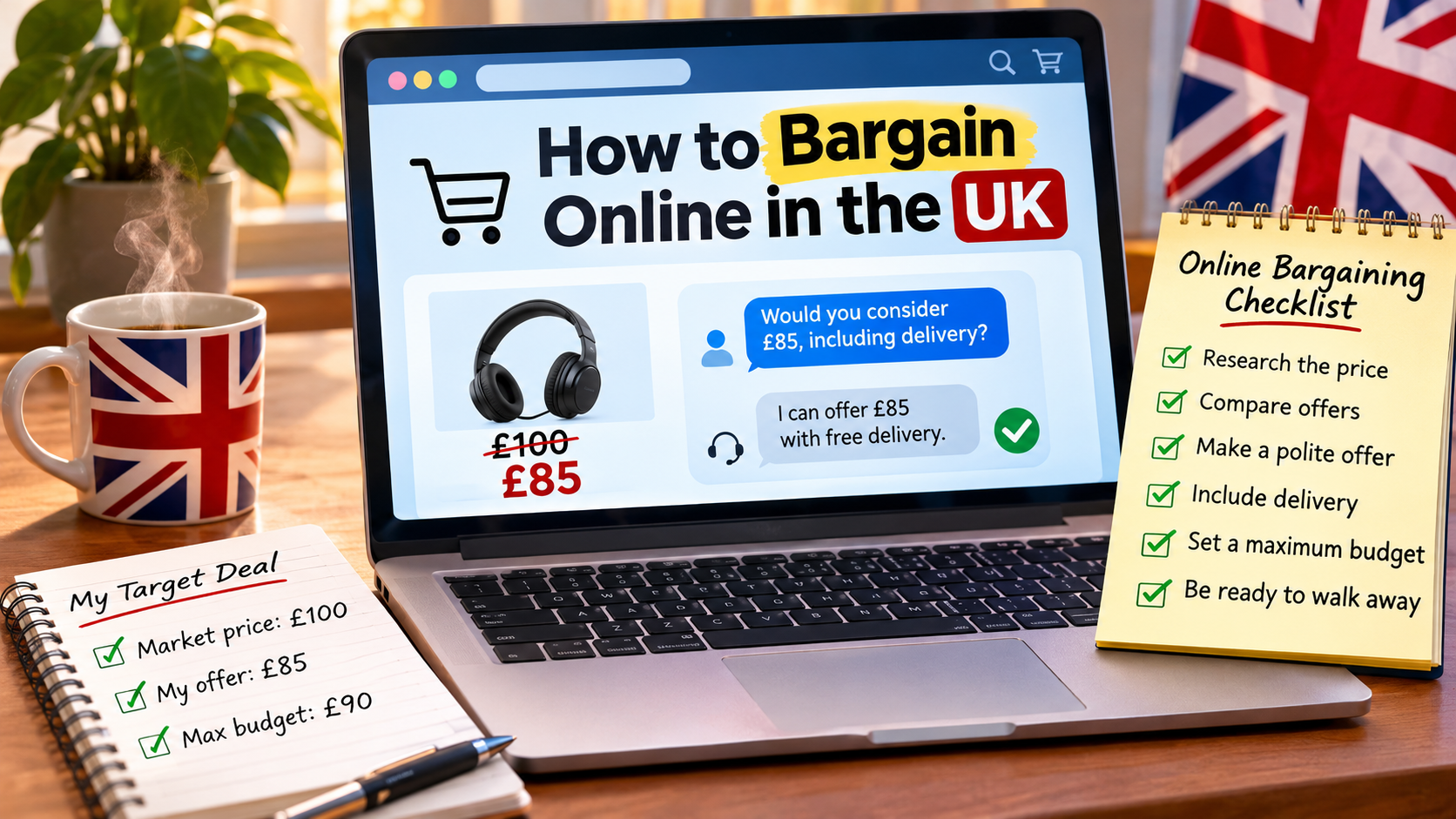
You bargain online in the UK by comparing price comparison sites first, then asking for a better deal through live chat or best offers on marketplaces, and being ready to walk away if the answer stays no.
The misconception that haggling belongs to market stalls costs shoppers money, because an online seller can only say no. A little chutzpah helps, along with some humour and charm, whereas pushy demands tend to backfire. Solid preparation usually beats nerve, so fix your limit before typing a word.
Different places call for different moves. On Facebook Marketplace you name a figure, in a shop’s chat window you ask what the company can do, and the old trick of silence after an offer works in a slow message thread too. Some salespeople push a warranty hard, which can double as leverage.
Read the advice from the Competition and Markets Authority before you start: paid rankings can lift products up a comparison list even when they aren’t the cheapest, and scammers love bargain hunters. Stick with trustworthy sellers, since a cheap deal that never turns up hurts your financial well-being more than paying full price.
Is It Actually Acceptable to Haggle Online in the UK?
Yes, haggling is acceptable in the UK, and most of the awkwardness comes from habit rather than any rule.
Many Brits see asking for a lower price as impolite, yet MoneySavingExpert says it is neither, and some shops write discounts into their official policies. A seller can refuse your offer, just as you can refuse their price. Even a shy shopper gets further when the other person empathises, and a friendly tone costs nothing, even in typed messages.
The wins can be small and odd. One MoneySaver talked an electrical shop into adding a George Foreman grill worth £60 to a £500 laptop. A gym sales team is paid to get you signing up, which makes membership prices negotiable. A Reddit poster spotted guitar gear listed at £1300 against £1380 retail and asked whether haggling was expected. Commenters said a gap that thin isn’t worth chasing, so ask when a listing sits at a higher price than similar items have actually sold for.
The BritWealth article cites a 2023 Which? study claiming broadband negotiators save an average of £85 a year, though I haven’t verified that study. The Consumer Rights Act 2015 still covers items bought in a sale, so a bargain doesn’t cost you protection.
What Should You Research Before You Start Haggling?
Before haggling, research what the item costs elsewhere, what extras come with it and how sellers have actually priced it.
Prices differ between retailers even during major sales, and extras like delivery can decide the winner. For used gear, Reddit users suggest checking sold listings on eBay rather than asking prices, then sending the seller that evidence with a firm offer. MoneySavingExpert tried live chat with 10 retailers and three gave something: Nike a 10% off code, and Dell took £55 off a £779 laptop.
Keep a wish list with a cap beside each item. AI tools can scan prices and trends, but verify every result on the seller’s own page, because AI can misread costs. For cars, ask for the “on the road” price so fees can’t appear later, and remember that some sealed goods can’t be returned once opened.
Smaller sellers reward a regular customer, so stay respectful even when the answer is no. Don’t assume a long-standing customer is rewarded with the best price.
Where Can You Haggle Online: Live Chats, Marketplaces or Messages?
You can haggle online through shop chat windows, marketplace messages and offer buttons, and the right choice depends on who controls the price.
Chat with shops and service providers can produce a discount code, but only if you know the going rate first, otherwise you can’t tell a real saving from a token one. If Canon recently gave £50 cashback on a camera model, the price is probably flexible.
Smaller sellers sometimes take less if you pay in cash, because cash avoids card processing fees. Bigger shops prefer a debit card to a credit card and may trade a discount for it. Paying over £100 by credit card also brings Section 75 protection under the Consumer Credit Act 1974.
Clearance is another route: discontinued lines and obsolete models make way for new stock, and shops want their display space back.
For marketplace deals, follow this order:
Set a target price from what similar items actually sold for.
Fix your walk-away point and don’t move it.
Send a short offer with one reason attached.
Meet somewhere in the middle, or move on.
Which Haggling Tactics Work When You Can’t See the Seller?
The tactics that work online are playing sellers against each other, asking for extras, respecting offer limits and timing your request.
Treat the ticketed price as an opening position. A shopbot such as Google Shopping or PriceRunner finds the lowest price, and you can show the result and ask the seller to match it. Check price history too, so a fake “sale” doesn’t fool you.
Service companies work differently: ask to cancel and you usually reach customer retentions, often called the disconnections department, which has far more discretion than the first agent. Keep the exchange mutually beneficial, because demanding a cut with no reason annoys the staff who hold the discount.
Tactic | How it works | Evidence |
|---|---|---|
Respect offer limits | eBay sellers who take offers allow only three bids, so make each count | MoneySavingExpert |
Ask for extras | In a chat test, Dyson added an extra £10 off a £350 vacuum plus a free tool kit | MoneySavingExpert |
Time the request | Sellers chasing targets near month end, the last Saturday or the financial year end are keener to deal | MoneySavingExpert |
When Is the Best Time to Ask for a Better Price?
The best time to ask is when a seller wants to close: near a sales target, as a contract renews, or after you have done your homework.
Ask about hidden deals and upcoming promotions before you pay, and do some reconnaissance on vouchers so you can quote them. Haggling trims a shop’s profits, yet a smaller sale beats none. One former employee of a DIY store said the policy was to give 10% to anyone who simply asked. In MoneySavingExpert’s poll, Tesco shoppers who haggled reported a 54% success rate, and many shops price-match when pushed.
In mature industries such as broadband, companies grow by tempting rivals’ customers, so a threat to switch gets attention. Challenge the renewal quote, because insurers may raise premiums and hope you won’t notice. Raising your excess or checking a multi-policy discount can lower the bill. Review your bills annually, since the gains accumulate.
Ignore fake urgency. Countdown timers, false claims about stock levels and misleading prices are illegal pressure tactics, according to the CMA.
How Do You Negotiate Bills and Contracts Online?
Negotiate bills and contracts by benchmarking your current price against rivals, then telling your company you will leave unless it improves the offer.
The UK market looks fixed-price, yet utilities, insurance and car purchases all leave room to bargain. Benchmark your rate on MoneySuperMarket or Confused.com, and for a car check Auto Trader to see how depreciation affects value. Bundle home and motor cover for a lower total, and turn down any upsell you don’t need.
Sellers earn commission on finance, so hint at interest without signing the credit agreement. Online contracts also include a cooling-off period: normally 14 days after receipt, stretching to 12 months if the seller fails to explain your cancellation rights, under the Consumer Contracts Regulations 2013.
Once you agree, make a follow-up call and send a recap summarising the terms so nothing is disputed later.
What Protects You When an Online Bargain Goes Wrong?
Your protection comes from legal rights, the way you paid and the scams you avoid, so secure all three before celebrating a bargain.
Online shopping is convenient, but prices fluctuate, so screenshot offers and keep your contracts and confirmations. In a shop or on the phone, no contract exists until money changes hands, and when prices are similar you should compare extras such as free delivery and read the small print.
Warranty pitches can work in your favour: sales teams chase warranty targets, and you can cancel within 45 days under a 2005 order on extended warranties. One MoneySaver cut a Sony LCD TV from £1,000 to £750 that way.
Avoid links in unexpected emails or messages and go straight to the seller’s site, where Get Safe Online can check whether a site is legitimate. QR codes can hide phishing links, so preview them first. If you think you’ve been scammed:
Stay calm and contact your bank or card company straight away.
Report it to Report Fraud on 0300 123 2040 if you’re in England, Wales or Northern Ireland.
In Scotland, report the crime to Police Scotland.
How Do You Avoid Pressure Tactics and Fake Urgency?
You avoid pressure tactics by checking whether a sale price is genuine and remembering that sale items carry the same legal standards as full-price ones.
A nation that spent £127 billion online in 2024 is a magnet for urgent-looking promotions, especially around Black Friday. One MoneySaver answered a salesperson’s “wait for Boxing Day” with “let’s do the deal now”. To test a price, the CMA suggests visiting with a VPN or incognito mode to see whether the figure changes, and I’d monitor a listing for a few days before paying.
Clearance stock with flaws or dents can be negotiated, but buying it doesn’t strip your rights: if the item later fails, you can still claim.
Rule | What it means |
|---|---|
Satisfactory quality | Goods are not broken or damaged |
Fit for purpose | Goods do the job they were sold for |
As described | Goods match the listing |
Faulty item | You have 30 days to ask for your money back in full, even on sale goods |
Report misleading discounts to Citizens Advice, which can pass serious cases to Trading Standards.
What Should You Do After the Deal Is Agreed?
After the deal is agreed, confirm the terms, track delivery and protect the relationship so the next negotiation starts warm.
Scotwork notes that virtual negotiations lose the personal touch, so choose the channel carefully. Videoconferencing helps relationships early on, instant messaging apps keep things fast, and a quick call repairs what typed messages lose. Reward loyalty where it’s returned: MoneySavingExpert’s poll found 84% of people who haggled at independent shops reported success, and a bulk order strengthens the case.
If delivery is late, start with the courier, but the seller is legally responsible. When money comes back it must include standard delivery and go back through the same payment method.
Stay collaborative. If a seller declines, consider an alternative or look elsewhere, and note that gyms often call back days later when the phone rings with a better offer. To improve, simulate a few scenarios with someone you trust before the next big purchase.
Is it rude to negotiate prices in the UK?
No, negotiating is not rude in the UK as long as you stay friendly rather than aggressive. MoneySavingExpert polled 1,575 people in November 2018, and B&Q topped the list with a 57% success rate among shoppers who haggled. Ask with confidence and a warmth that humanises you. If the answer is no, accept it, weigh whether the item is essential, and ask again later. If you’re nervous, practise on a friend or family member first.
What if the seller refuses to negotiate?
If a seller refuses, stay polite, keep it non-combative and ask for someone with more authority, such as an assistant manager. Check price codes and price endings on clearance stock, and remember a Reddit commenter’s point that used goods are rarely worth more than 50% of retail. BritWealth’s case study has Sarah paying £45 for broadband, citing a rival at £30 and her 5 years as a customer, and ending up £180 a year better off. Mention competitor prices or loyalty programs, and renegotiate later if nothing moves. If the item is faulty, ask for a refund, repair or replacement.
How do I negotiate when I’m not confident?
Start small and prepare: set a budget, rehearse some gentle patter, and remember the worst that can happen is a no. Haggling feels unnatural to stiff-upper-lipped Brits, so try low-stakes practice such as role-playing, and keep a poker face until you shake on it. Give clear reasons and stay professional. Reframe your mindset: you’re seeking a deal both sides can live with. Subtle good cop bad cop helps too, praising the salesperson while pointing to the manager’s power. Find common ground to build rapport, and be proactive.
Can I negotiate online?
Yes, many online sellers and service companies let you negotiate through chat windows and offer buttons. Ask for a free add-on rather than a price cut, shop for counter-seasonal items such as Christmas-packaged cameras in January, and ask whether sale prices survive after the end of sale. When you quote a rival, be specific: “I pay £35 a month and have seen £28.” Pay carefully, because chargeback is not a legal right and usually doesn’t cover PayPal or Klarna.
How often should I negotiate my bills?
Go back to your bills and haggle at least once a year, and again whenever your price changes. Companies such as BT, Sky, Virgin Media and Vodafone compete hard, so ask at quiet times such as midweek mid-mornings. Use chat functions or customer service lines, with real-time answers where you can, and send texts or e-mail to keep a record. Expect a small discount first and keep up your persistence. A long-term relationship helps, but the savings only come if you ask.